
What if the most dangerous wallet action is not the transaction you are watching, but the permission you granted several days earlier? In decentralized finance, users often focus on the amount leaving their wallet. Yet the deeper risk may be an approval: a standing instruction that allows a smart contract to move a particular token later, without requesting a new signature for every transfer. Transaction simulation and token approval management make this hidden state more visible, but neither removes the need for judgment.
That distinction matters for anyone using decentralized exchanges, lending markets, bridges, liquid staking protocols, or yield applications in the United States. A wallet can explain what a transaction appears likely to do, while the blockchain ultimately executes code under rules that may depend on contract logic, token behavior, market conditions, and later changes elsewhere in the system. Good security therefore comes from combining simulation, permission hygiene, verified software, and a clear understanding of what a signature authorizes.
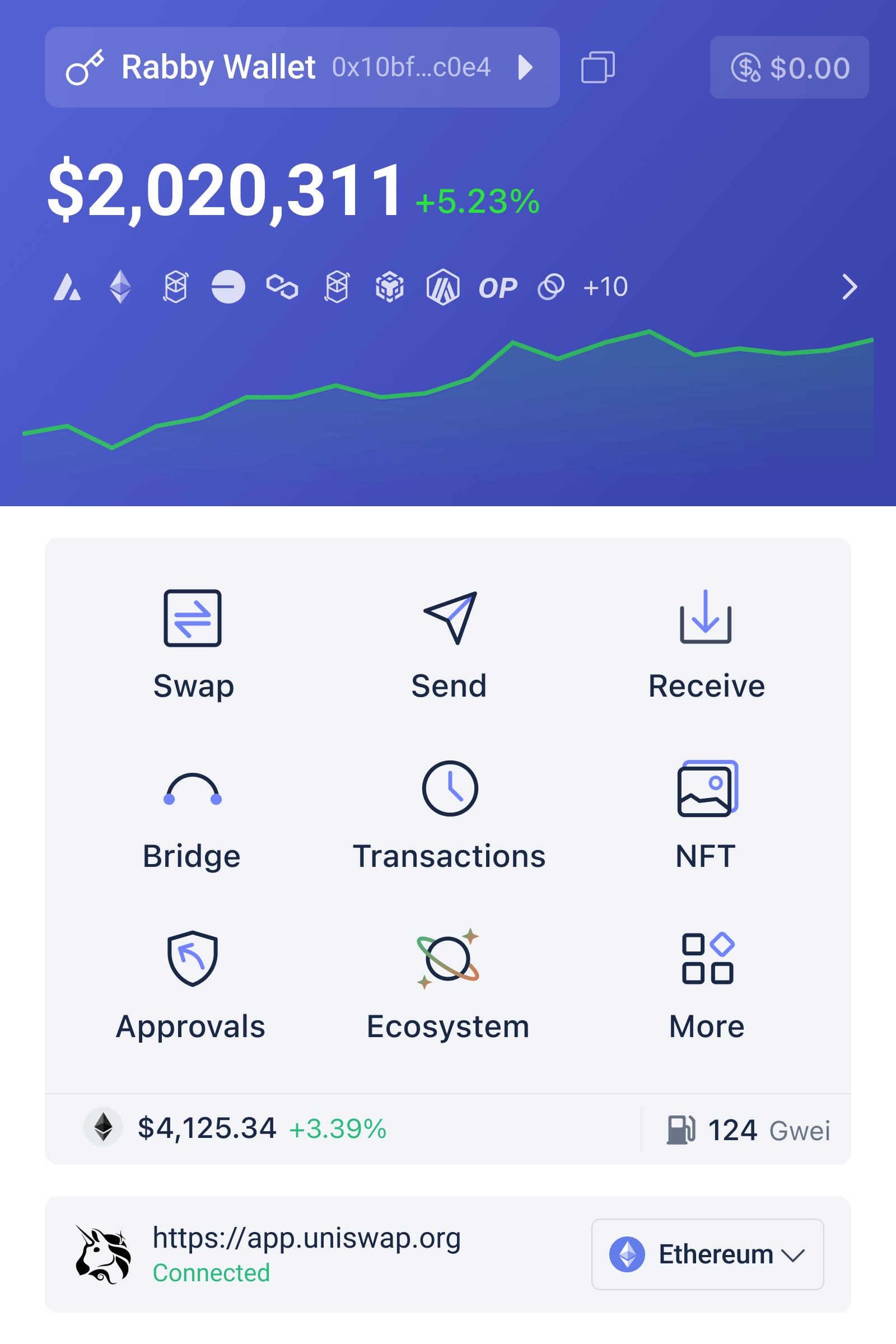
Myth: A wallet simulation tells you exactly what will happen
A transaction simulation is best understood as a controlled preview. Before broadcasting a signed transaction, a wallet can execute the proposed call against an available representation of blockchain state and report likely outcomes: tokens received, tokens spent, approvals created, contract calls made, or whether the transaction would revert. This is more informative than reading a raw function name or guessing from a website’s button label.
The mechanism is important. A DeFi transaction usually contains a destination contract, encoded instructions, an account address, and parameters such as token amounts, recipient addresses, or deadlines. The wallet or its supporting infrastructure evaluates that call in a simulated environment. If the call succeeds in that environment, the result can help translate technical execution into a human-readable summary.
But “preview” does not mean “prediction with certainty.” The simulation may rely on a particular block state, a particular RPC provider, and assumptions about external contracts. Prices can move between simulation and inclusion. A protocol can depend on another contract whose state changes. A malicious interface may present a transaction that looks ordinary while encoding an unexpected recipient or permission. Simulation reduces uncertainty; it does not eliminate it.
This is the first misconception to correct: a favorable simulation is evidence about the proposed execution, not a guarantee about the trustworthiness of the protocol or the future safety of the approval. A transaction may succeed exactly as simulated and still grant a dangerous allowance to a compromised or deceptive contract.
Why token approvals create a longer-lived risk
An approval is a permission recorded in a token contract. It commonly tells that token contract that a specified spender may transfer up to a specified amount of the owner’s tokens. The user may approve a router, lending market, vault, or other application contract, after which a later transaction can use the allowance through a transfer mechanism.
The non-obvious point is that the approval and the later transfer are separate events. Closing a DeFi website, disconnecting a wallet, or revoking a browser connection does not necessarily cancel an on-chain allowance. If the spender remains authorized, the permission can persist until it is consumed, reduced, or revoked. In some cases, interfaces request a very large allowance to avoid asking for repeated approvals. That may improve convenience while expanding the consequences of a compromised spender.
Approval management is therefore a form of access control, not merely an interface preference. The relevant question is not only, “Did I use this protocol?” It is also, “Which contract can still move which tokens from this address?” A wallet that exposes approval details helps users ask that question before an old permission becomes an invisible liability.
There is a trade-off. Requiring a fresh approval for every interaction can reduce the duration of permissions but adds network fees, extra signing steps, and opportunities for user error. A narrowly limited approval may be safer in principle, yet some applications are designed around broader allowances. The practical objective is not to make every permission maximally restrictive at any cost. It is to match the permission’s scope and lifetime to the user’s actual need.
Reading a simulation without outsourcing judgment
When a wallet displays simulation results, inspect the changes rather than treating the result as a green light. Look for the assets leaving and entering the account, the contract receiving the call, any allowance created or increased, and whether the recipient is the address you intended. A swap should show a plausible exchange rather than an unexplained transfer of unrelated tokens. A lending transaction should make clear whether collateral is deposited, borrowed, or approved for future use.
Amounts deserve special attention. “Unlimited” approval is not the same as transferring an unlimited balance immediately, but it is a potentially broad future permission. A token approval for a trusted contract may still be inappropriate if the user intended a one-time interaction. Conversely, a small transaction amount can conceal a large approval if the interface separates the approval step from the actual protocol action.
Users installing a wallet should also treat software provenance as part of transaction security. Use the project’s legitimate distribution channel and verify that the extension’s publisher information and requested permissions make sense. For readers researching the rabby wallet extension, the important security principle is not simply having a simulation feature; it is learning to compare the simulated state changes with the action you believe you are signing.
Recent disclosure information associated with Rabby Wallet’s Chrome Web Store listing also illustrates a broader point: privacy and security are related but distinct questions. A wallet’s data-collection disclosure concerns how the software handles information. It does not, by itself, prove that a particular smart contract is safe, that a transaction is economically sensible, or that an approval will never be abused. Those questions require separate checks.
Myth: Revoking every approval is always the best strategy
Revocation is useful, but a blanket rule can obscure the real decision. To revoke an approval, a user normally submits another on-chain transaction that changes the allowance. That costs network fees and may require interacting with a token contract. On a busy network, the cost may be material relative to a small balance. A user who revokes a needed permission may also be surprised by a new approval request during the next protocol interaction.
A more useful framework is to evaluate three dimensions: spender identity, permission scope, and exposure. Is the spender the contract the user intended to use? Is the allowance limited to a reasonable amount or effectively unrestricted? How valuable are the tokens, and how likely is the account to interact with that protocol again? High-value assets, abandoned applications, suspicious contracts, and permissions that no longer serve a purpose deserve stronger scrutiny.
Separate wallets can also reduce concentration risk. A long-term holding address does not need to sign experimental DeFi transactions. An active wallet can be funded only with the amount needed for a particular strategy. This does not make the active wallet invulnerable, and it introduces operational complexity, but it limits the blast radius if a signature, device, or contract interaction goes wrong.
Where simulation breaks down
Simulation is weakest when the environment is changing quickly or the transaction depends on assumptions that are not visible in the final summary. A decentralized exchange may execute against liquidity that changes before inclusion. A lending position may become unsafe after a price movement. A bridge may involve multiple steps or custodial assumptions beyond the first contract call. A token may contain unusual transfer behavior that complicates a simple balance preview.
There is also a social-engineering boundary. If a user is persuaded to sign a transaction for the wrong purpose, a technically accurate simulation may faithfully describe the harmful action. Security tools can reveal mechanics, but they cannot decide whether an unfamiliar investment claim, support message, or urgent request is credible. Nor can they guarantee that a website is free from compromise merely because one transaction appears ordinary.
The strongest mental model is layered: simulation checks the likely effects of this call; approval management checks standing permissions; wallet isolation limits account-level exposure; careful software installation reduces interface risk; and deliberate signing addresses human deception. Each layer covers a different failure mode. None substitutes for the others.
A reusable checklist for DeFi signing
Before signing, identify the contract and the intended economic action. Then inspect the simulated balance changes and search specifically for approvals, transfers, and unexpected recipients. If an approval is required, ask whether the amount and duration fit the use case. After the interaction, review whether the permission remains active and revoke it when the relationship is no longer needed, taking fees and operational necessity into account.
For unusually valuable transactions, slow down. Confirm the network, token, recipient, and application domain through an independent path rather than relying only on a pop-up. Treat unexpected warnings as information, not as obstacles to click through. If the simulation cannot explain the transaction in ordinary language, that is a reason to pause, not evidence that the wallet is malfunctioning.
Looking ahead, the useful direction for wallet security is likely to be better interpretation rather than a promise of perfect automation. Tools may become more effective at distinguishing one-time transfers from durable permissions, showing contract relationships, and making multi-step DeFi actions understandable. Their value will depend on the quality and timeliness of the state they observe. Users should watch whether warnings become more specific and actionable, while remembering that changing blockchain state will always impose a limit on static previews.
Frequently asked questions
Does transaction simulation prevent a malicious approval?
No. It can reveal that an approval is being created, identify the apparent spender, and show the likely permission scope. It cannot make a malicious contract trustworthy or prevent a user from signing a transaction after seeing the warning.
Should I revoke every token approval after using DeFi?
Not automatically. Review approvals according to the spender, allowance size, asset value, and whether you still need the protocol. Revoking unused or suspicious permissions is sensible, but revocations cost network fees and may create extra friction for legitimate future use.
What is the most important thing to check before signing?
Compare the wallet’s reported state changes with your intended action. Pay particular attention to approvals, unexpected token transfers, contract recipients, and broad permissions. If the result is unclear, do not sign until you understand what the transaction authorizes.
DeFi security becomes more manageable when users stop treating a transaction as a single moment. The immediate call, the standing approval, the account holding the assets, and the software presenting the request are separate parts of one risk system. Transaction simulation makes that system easier to inspect; approval management keeps old permissions from disappearing into the background. The goal is not perfect certainty, but informed authorization with a smaller and more visible range of possible failure.